Looking at Development Through a Different Lens
When these developmental layers are interrupted or reorganized, the way a child distributes attention and interacts with the environment may also change.
Motor Coordination
Motor development helps the brain coordinate movement and build physical stability.
Sensory Integration
The nervous system processes and organizes input from the body and environment.
Visual Alignment
As motor systems stabilize, the mind becomes increasingly able to rely on vision to guide interaction.
There Is No Such Thing as Purposeless Behavior
Every movement a child makes reflects how the mind is attempting to organize perception, attention, and interaction with the environment.
Behaviors that may appear repetitive or unusual often serve a functional role in helping the nervous system regulate sensory input and stabilize attention.
Understanding the purpose behind these behaviors helps us better understand how the mind is responding to the signals coming from the body and the environment.
Why Some Children Seek Movement
Many children with autism show strong interest in movement and visual patterns.
PARENTS OFTEN NOTICE ATTENTION DRAWN TO:
- Spinning objects
- Ceiling fans
- Flickering lights
- Reflections
- Repetitive movement
These patterns are closely connected to how the visual system of the brain processes motion and spatial change.
When central visual engagement becomes difficult to maintain, the mind may rely more heavily on motion-based visual input and tactile or movement feedback. Movement provides the brain with spatial information while helping the mind stabilize attention.
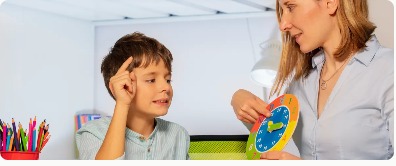
Peripheral and Central Visual Attention
The visual system distributes attention across both the central and peripheral visual fields. Peripheral vision allows the brain to detect movement and spatial change, while central vision supports detailed perception.
Peripheral Attention
- Motion detection
- Spatial awareness
- Environmental monitoring
Central Visual Engagement
- Focus
- Gaze
- Detailed visual information
Vision and Movement Develop Together
Vision does not develop in isolation. Early motor development helps the brain learn to coordinate eye movements and stabilize visual perception.
INFANT MOVEMENT PATTERNS HELP ORGANIZE NEURAL SYSTEMS RESPONSIBLE FOR:
- Posture and balance
- Spatial awareness
- Ocular motor coordination
- Binocular vision
As these systems stabilize, the mind becomes increasingly able to rely on vision to guide movement and interaction with the world.
Central Visual Engagement and Language
Communication begins long before words. Children often learn communication by:
- Watching faces
- Observing gestures
- Copying movements
These experiences rely on central visual attention. When central visual engagement is difficult to maintain, the mind may spend less time observing detailed visual cues, which can influence how communication develops.
Why Language May Develop Later
Language development depends on several systems working together. Children typically learn speech by observing mouth movements, copying sounds, and coordinating their own oral motor movements.
THESE PROCESSES REQUIRE:
- Precise visual coordination
- Focused attention
When attention is organized primarily around peripheral motion processing, children may spend less time observing the detailed visual information involved in speech.
This difference in attentional organization can influence how communication and language pathways develop.
Development Happens in Layers
- Reflex foundations
- Motor development
- Body awareness
- Imitation
- Communication
- Language and learning
Development builds from the ground up. When foundational systems are still organizing, later abilities such as communication and language may develop along different timelines.
Developmental Systems That Support Communication
Body Awareness
The brain uses sensory signals from muscles and joints to build an internal map of where the body is in space.
Imitation
Watching and copying movement allows the mind to learn new people, actions and communication.
Oral Motor Coordination
Precise coordination of the lips, tongue, and breath allows the brain to produce speech while the mind organizes meaning and correct expression.